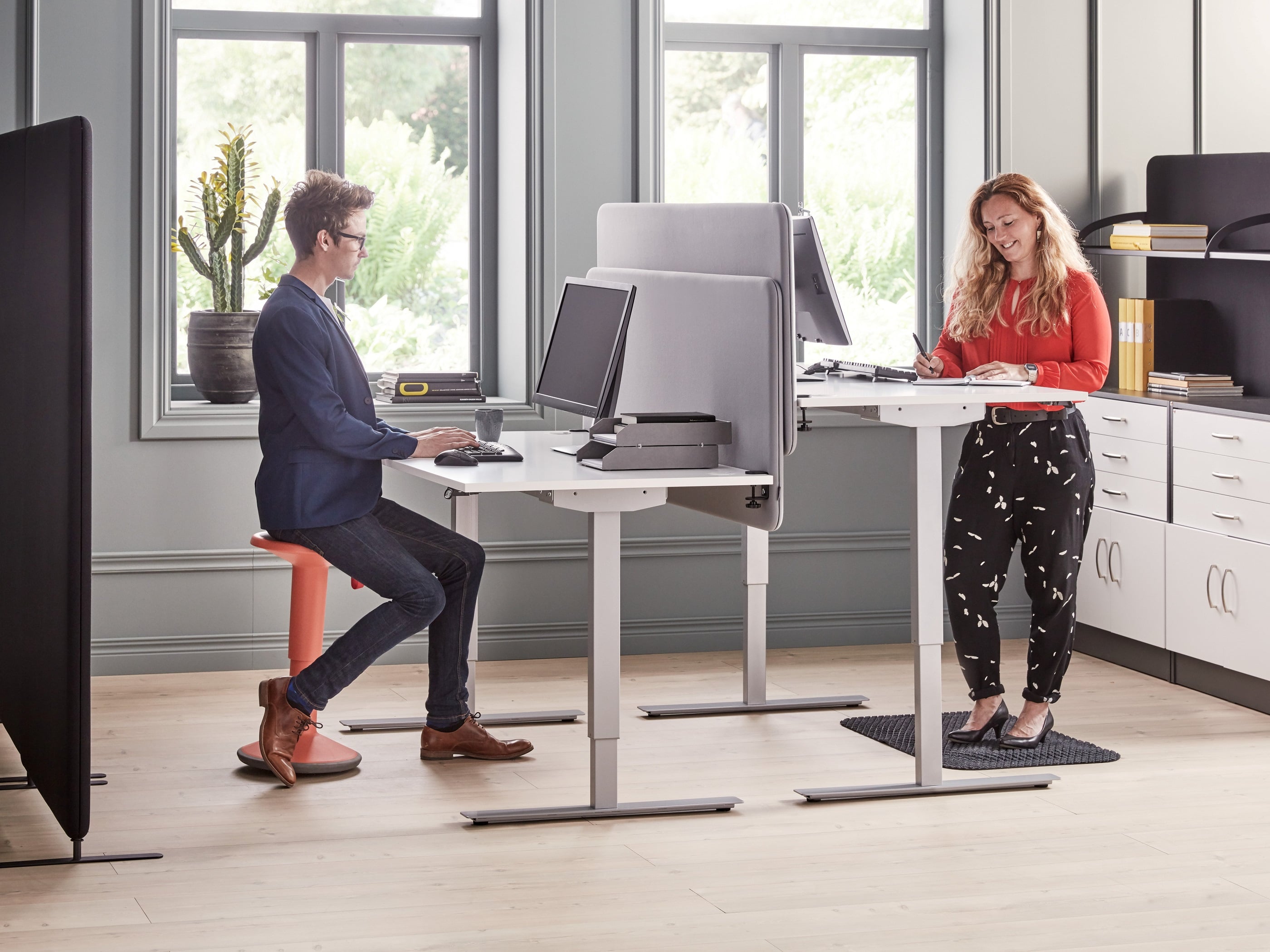
Neutral and relaxed
When joints rest near their middle range, the body tends to feel more settled. We note where a setup nudges you toward awkward angles.
Home / Ergonomics
The thinking underneathErgonomics can sound technical. At its core it is about arranging a space so that working in it feels natural and varied. Here is how we think about it, in plain terms.
A common misunderstanding is that one ideal sitting position exists and everything else is wrong. In practice, comfort tends to come from variety: small shifts, regular changes, and a setup that supports more than one way of working.
Our reviews lean into that idea. Rather than chasing a single arrangement, we look at whether your space allows easy, natural movement throughout the day.
When joints rest near their middle range, the body tends to feel more settled. We note where a setup nudges you toward awkward angles.
Staying in any one position for hours rarely feels good. We look at how easily your space invites a change of stance or a short pause.
Screen distance, height, and glare all shape how relaxed your gaze stays. Small placement changes often make a noticeable difference.
A few terms come up often. Here is what we mean by them, without the textbook tone.
We aim to be useful and clear about what we can and cannot say.
Years of reviewing real, lived-in workspaces across Victoria.
A consistent method built on widely published ergonomics guidance.
We cite the public sources behind our reasoning so you can read further.
Clear limits: general information only, never medical guidance.
Shared as general information. They are not advice for any specific person or condition.
You do not need a review to start thinking about your space. These general habits cost nothing and are easy to fold into a normal day. Keep what suits you and set aside the rest.
Talk it through with usWhen you notice how a space asks you to sit, stretch, and look, you are already most of the way there. We simply help you notice it sooner.
Choose which categories you allow. Strictly necessary cookies keep the site working and cannot be switched off.
Required for security, navigation, and remembering your consent choice.
Helps us understand, in aggregate, how pages are used so we can improve them.
Used to make any future messages we share more relevant. Off by default.